Why I hate self care
Does Self-Care Feel Like Another Thing You’re Failing At?
If self-care has started to feel like another obligation you’re not doing well enough, I have good news for you:
the problem isn’t you — it’s the way self-care has been defined.
That might sound dramatic. And to be clear, I don’t hate caring for myself.
What I hate is the way self-care has been framed, marketed, and quietly moralized.
Somewhere along the way, self-care stopped being about listening to ourselves and started becoming another performance. Another way to stay busy fixing, optimizing, monitoring, and managing ourselves — especially our bodies — while calling it empowerment.
For women who grew up in high-demand systems — whether that was religion, culture, or patriarchy — that framing is especially dangerous. Because we’re very good at turning care into obligation and worthiness into effort.
If self-care is making you feel more preoccupied than powerful, more anxious than supported, more behind than nourished — this conversation is for you.
How Self-Care Became Moralized
In Mormonism, righteousness was performed through consistency, discipline, and obedience.
And to be clear, there’s nothing inherently wrong with those things. Structure, devotion, and consistently showing up canbe supportive.
But over time, those practices stopped feeling like care and started feeling like surveillance.
There were so many moments where I could sense that I was serving the system more than the system was serving me. The checklist was complete. The boxes were checked. The appearance of goodness was intact.
But I wasn’t actually being nourished.
I was tired.
I was disconnected from my own needs.
I was doing the “right” things while slowly losing access to myself.
What made this especially confusing was that I didn’t have language for depletion. If something felt empty or draining, I assumed the problem was me. I needed more faith. More discipline. More humility.
I learned to override my internal signals in favor of external approval.
If it looked righteous, it must be right — even if my body and my inner world were quietly saying no.
So instead of listening, I doubled down.
I tried harder.
I became more consistent, more obedient, more disciplined — not because it was life-giving, but because that’s how you proved you were a good person.
Looking back, what stands out isn’t just the exhaustion. It’s how normalized that exhaustion was.
Depletion was reframed as virtue.
Self-denial was spiritualized.
And any desire for something that actually fed me felt suspicious, selfish, or unsafe.
When goodness is defined by performance instead of nourishment, you can live for a very long time disconnected from yourself while believing you’re doing everything right.
Why This Pattern Shows Up in Modern Self-Care
What strikes me now is how familiar that pattern feels when I look at modern self-care culture — especially wellness and beauty culture.
Once again, there’s a set of behaviors we’re encouraged to perform to prove that we’re doing life “right.”
If we’re just consistent enough, disciplined enough, optimized enough, we’ll finally feel calm. Confident. Healed.
And again — none of those things are inherently bad.
Caring for your body isn’t the problem.
Wanting to feel good in your skin isn’t the problem.
Structure and routine can be genuinely supportive.
But somewhere along the way, the focus shifts.
Instead of asking Is this nourishing me?
We start asking Am I doing it correctly? Am I acceptable?
Instead of listening to our bodies, we start monitoring them.
Tracking them.
Fixing them.
Improving them.
The same trade-off appears:
Energy goes toward maintenance instead of meaning.
Toward self-correction instead of self-connection.
Toward looking like we’re doing well instead of actually feeling well.
And when something doesn’t feel nourishing, the solution offered is rarely curiosity.
It’s more effort.
Another routine.
Another product.
Another way to try harder at being okay.
Different system. Same mechanism.
If your self-care feels like something you can fail at, it has already lost its purpose.
When Wellness & Beauty Are Sold as Care
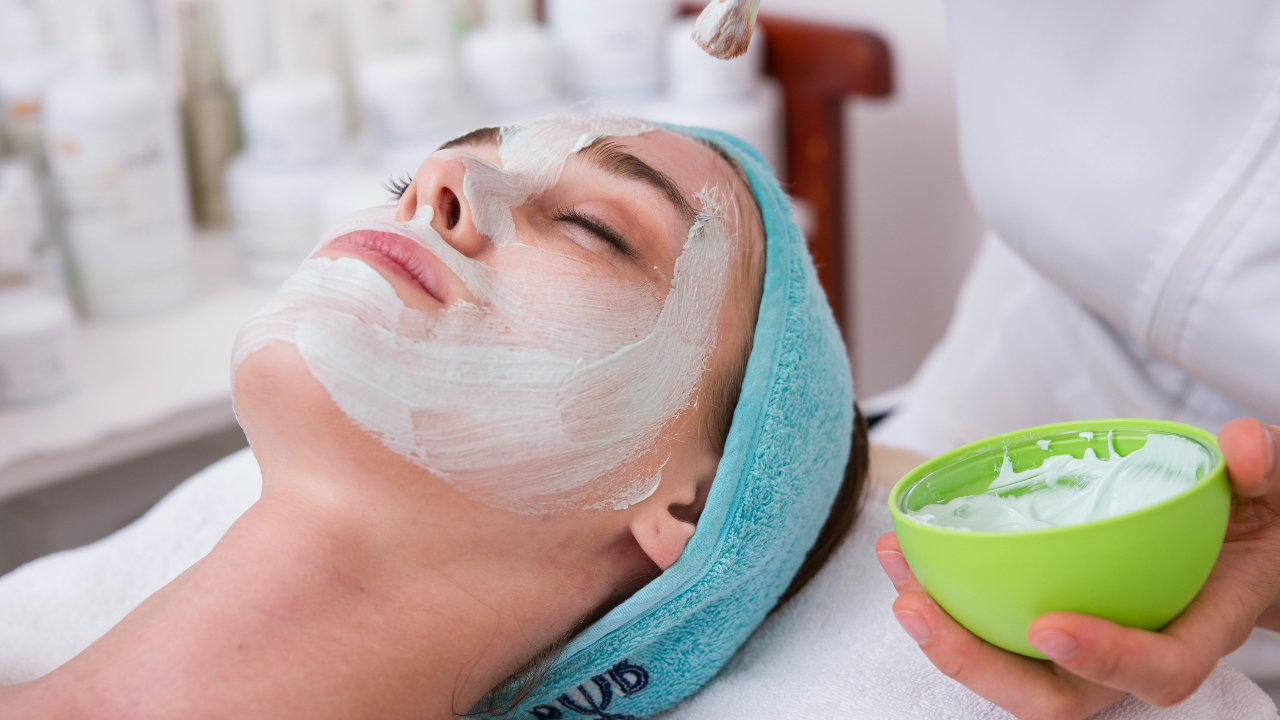
Much of what we now call self-care lives almost entirely on the surface of women’s lives — our bodies, our appearance, our habits, our routines.
Wellness and beauty are framed as empowerment, as if caring for ourselves primarily means maintaining ourselves.
And I want to be clear:
I love a good skincare routine.
I love getting my hair done.
I love a pedicure.
There is nothing wrong with enjoying beauty, adornment, or routine. Those things can be nourishing.
The problem isn’t the practices.
It’s the way they’re positioned as the main path to care.
Because when wellness and beauty are sold as self-care, care quietly becomes another form of self-monitoring.
We’re encouraged to:
-
Track ourselves
-
Improve ourselves
-
Fix ourselves
-
Slow aging
-
Manage weight
-
Regulate emotions
-
Optimize energy
All under the banner of loving ourselves better.
What often gets lost is the question:
Who is this actually serving?
This kind of care requires enormous attention.
Attention to how we look.
Attention to how we’re perceived.
Attention to whether we’re doing enough, buying the right things, following the right protocols.
And attention is power.
Where your attention goes, your energy goes.
Where your energy goes, your life goes.
From a patriarchal standpoint, this is incredibly efficient. You don’t have to silence women outright if you can keep them busy maintaining themselves.
If women are preoccupied with staying youthful, calm, attractive, healed, and optimized, there’s less energy left for:
-
Creativity
-
Leadership
-
Anger
-
Boundary-setting
-
Collective action
What gets framed as empowerment often functions as distraction.
And the most insidious part?
It feels voluntary.
It feels chosen.
It feels like self-expression.
But when care is defined by how well you maintain your body or regulate yourself to be more palatable, power is quietly redirected away from your inner authority and toward external standards.
The Problem With “Anti-Beauty” Rules Too
I also want to name something else I’ve noticed.
Even inside self-care culture, there’s often an invisible list of rules — the right kind of wellness, the right kind of healing — and a quiet judgment about the things you shouldn’t be doing.
I’ve seen messages that suggest if you invest in your appearance in certain ways, you’re still “asleep.” Still buying into patriarchy. As if the only enlightened option is to stop caring entirely about how you look.
But that doesn’t feel true either.
Because the opposite extreme is just another rule.
Another way women are told how they’re allowed to exist in their bodies.
One version says: optimize yourself.
The other says: prove you’re above caring.
Both are purity tests.
Neither centers women’s lived experience.
A Different Question
What feels more honest — and more empowering — is a different question altogether.
Not:
-
Does this make me more acceptable?
-
Does this make me more admired?
-
Does this align with someone else’s idea of liberation?
But:
Does this make me feel more like myself?
Care that reconnects you to yourself doesn’t feel frantic.
It doesn’t feel moralized.
It doesn’t feel like a performance.
It feels relational.
It feels grounding.
It feels like coming home.
And if you want to take care of yourself — but self-care has started to feel like another job you’re failing at — there is nothing wrong with you.
It may simply be time to stop performing care…
and start listening for what actually nourishes you.
If this conversation stirred something in you and you want support reconnecting to yourself in a way that isn’t prescriptive or performative, I have a free download of three anxiety soothing creative exercises. You don't need any art experience, you just need 5 minutes of your time to feel calmer. You can download them HERE
If you are ready to take this work to a deeper level, sign up for Sunday Muse! You'll get a free therapeutic art activity in your inbox every week designed specifically to help you go from confusion to clarity so you can create the beautiful, healthy, post Mormon life you deserve.